Have you got the Cheryl Syndrome?
I should probably explain.
Years ago, at the second advertising agency I worked for, we had something we called The Cheryl Syndrome. Cheryl was a real person, although I never actually met her. She'd been there right at the beginning, back in the 1980s, when the founder came up from London to set up one of Yorkshire's early advertising agencies specialising in recruitment.
In the early days it was basically the two of them. He did the advertising, Cheryl did the admin, and between them they worked out how everything needed to be done.
Years later, I joined the agency. Cheryl had gone. But Cheryl's systems hadn't.
I'd ask why we did something in a particular way.
“Because Cheryl did it.”
Okay... but why?
“That's how Cheryl did it.”
And that became The Cheryl Syndrome.
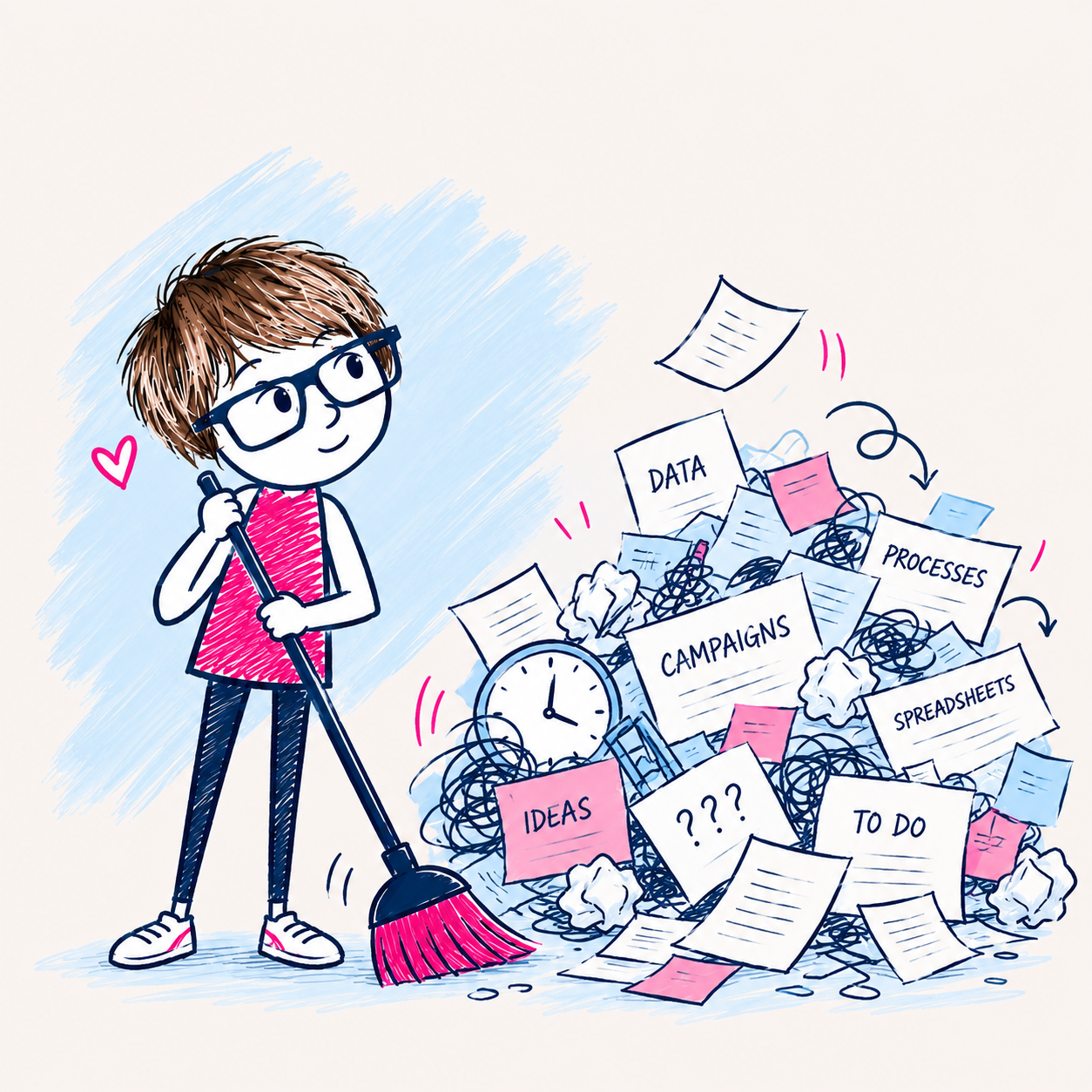
It wasn't a criticism of Cheryl. She'd worked out what worked for the business at the time. The problem was that nobody had stopped since to ask whether it was still the best way to do it. And that's always stuck with me. I think it's why, when something feels messy, confusing, inefficient or overwhelming, I can't help poking at it.
Why do we do that? Does anybody actually need this? Why are we putting the same information in twice? Could we make this easier?
And, occasionally...
Couldn't we get the system to do that?
It's not just processes either. I'll be looking at campaign statistics and think, hang on... something's not right there. Or I'll read something completely unrelated online and suddenly think, oh! That could work for so-and-so.
I like joining dots. I like finding out why. And I really like figuring out whether there's a better way.
I've had a bit of a Cheryl moment myself recently with Meta and LinkedIn campaign approvals. The existing process worked. It just bugged me that what the client saw at approval stage didn't really reflect what I was seeing when I worked on the campaign. So I've changed it.
I've created a way for clients to see the creative, copy, targeting and campaign information together, review it and approve it in one place.
It's still evolving. I've had some really good feedback, and it's a better way for now.
That's important.
Because I don't want somebody using my process in ten years' time simply because “that's how Helen did it.”
Things change, and just because something is there doesn't mean it's still the best way to do it. So perhaps it's worth asking occasionally:
Have we got a Cheryl?
And if the answer leaves you with something messy, confusing, inefficient or overwhelming...
we can sort it out.